finding your voice
I’ve been thinking about AI recently, which is nothing new to say, I know, as AI has become a growing presence and subject for discussion. But I happened across a few posts on Instagram last week (I say ‘happened across’ but a friend shared one to her stories, which I liked, and then the AI-driven algorithm sent another my way) including one from a poet. Put simply, the poem was comparing the ‘beautiful’ and fast words that are software-generated with the real, raw, complex, nuanced emotions and experiences of life and asking: how can a machine ever compare?
Of course, AI is part of the fabric of our digital experience now, from AI-generated photo edits that are simply a faster and easier way of doing the things we used to take much longer to do, to the overview that accompanies your Google search. Don’t get me wrong, I use both all the time, but, with the latter, I also know to check the answers and the sources of the answers.
But using AI to write? No thanks. Over the last year or so I’ve been regularly reminded that AI can write faster than I can, and it won’t get bogged down in sentence structure or spend ages mulling over specific words. And, as a writer, this is what I’m competing with now: software that can do things faster and slicker, and with all the ‘right’ words, and that doesn’t have days when it hasn’t slept well the previous night and needs a few mugs of strong tea to feel even vaguely alive, or, indeed, wrestle words from within a cloud of brain fog.
Yes, this can feel a bit depressing, but recently I was reminded of something really important. (And, sidenote: I’m not getting into the environmental impact of AI here – I’m simply reflecting on how this might be changing and shaping how we write and communicate our ideas.) I was compiling an events list for a client – not a creative writing project, but a list of events happening in a specific area. I always use Google, and I’ll check on listings pages I know and on sites such as the National Trust, and I started using ChatGPT in case there were other events that I hadn’t spotted. Casting the net wide and all that.
ChatGPT came back with a neat list of events and ended with an ‘honest reality check’ and a prompt: ‘If you'd like, I can also do a deeper curated list specifically within 30 minutes of [the location] or a dog-friendly events list (very relevant if Harris is joining the adventure).’
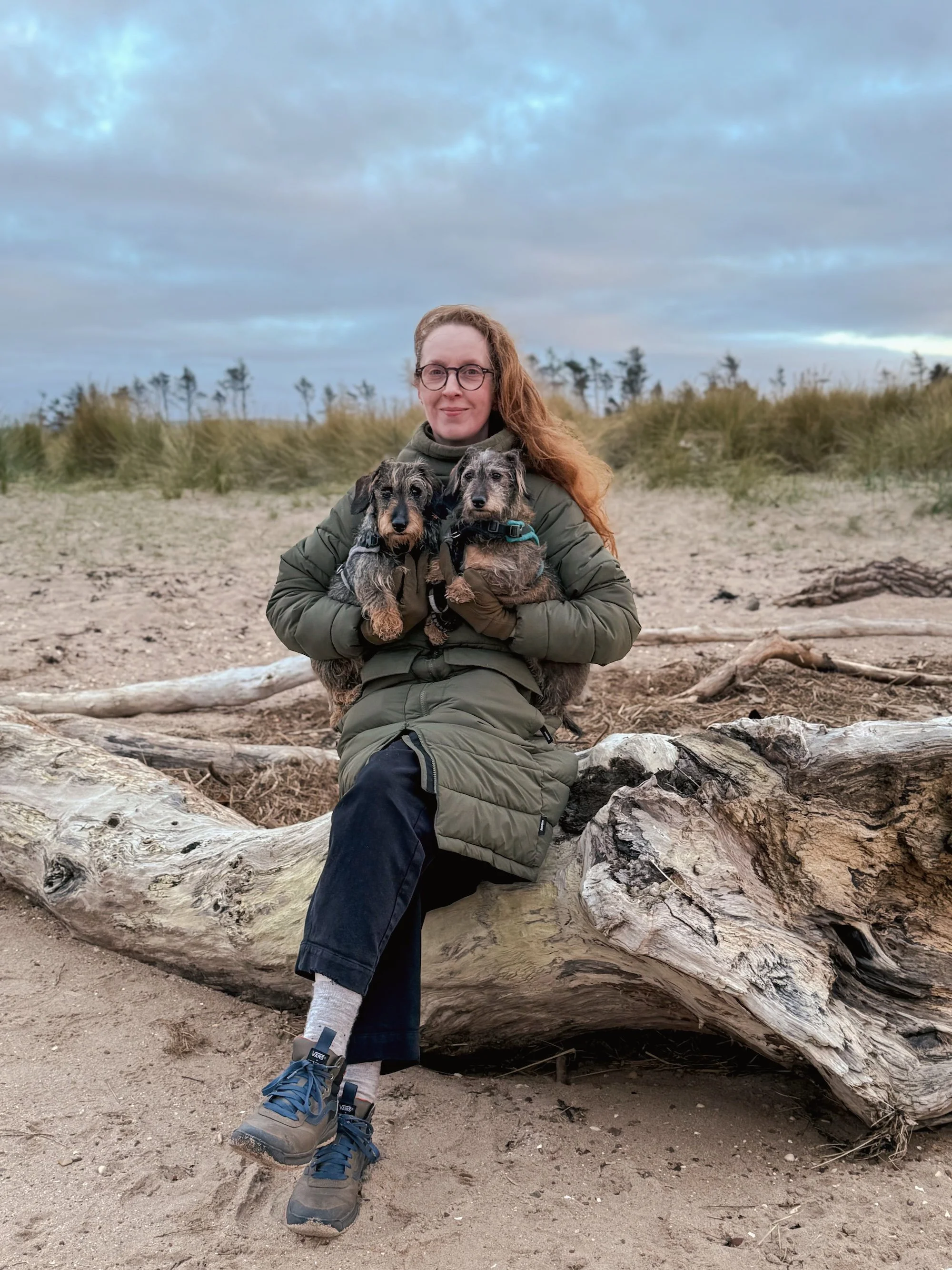
I hadn’t mentioned Harris at any point, but, of course, in this joined-up digital world where everything knows everything, ChatGPT knew there was a Harris. It knew that Harris was a dog and that, together, we were all about adventures.
But here’s where my tired, foggy, either over or under-caffeinated brain can do things better than AI: context. Knowledge. Understanding. That’s a mistake I’d never make if I was writing to someone, or about someone. That I never made as a journalist. That’s a mistake than no one I know from Instagram would make. That no client would make. That no friend would make. AI might know a lot, but it didn’t know about Harris, the most life-shifting being I’ve ever had the privilege to know. To ChatGPT, Harris was in the present tense. ChatGPT didn’t know about the biggest, most profound loss of my life. Of our lives.
Why am I writing all of this, and why here and now? I think it’s because I’ve been feeling disillusioned. I miss working in journalism. This was such a key part of my identity for years, the thing that I filled my days with, and that was about much more than paying the bills. I relished the opportunity to interview people and to tell their stories. Yes, I wrote about design, but people were always at the core of those features. When writing about someone’s home or an architectural project, the context mattered. What led to this space, to these design decisions? What were the references, the points of inspiration? How does this space make you feel? How has it changed how you live? It was never simply about the build or the renovation or the decorative choices. It was always about the people who made the decisions.
And I miss this. And when the only jobs being punted my way on LinkedIn (not that I’m looking for a ‘job’ but it’s interesting to key an eye on what’s out there) are for AI ‘trainers’. The most recent one that popped into my inbox over the weekend was to work with AI chatbots – and I quote: ‘You will have conversations with chatbots, answer their prompts, and fact-check their replies.’
*Wails silently into keyboard.*
So yes, hello disillusionment. But also, there’s this: a long time ago – and I’m aging myself as I write this but let’s just say it: thirty one years ago – I was right at the beginning of my career, and the senior editor of the newspaper I’d just started to work for sat me down in his office for a chat. I remember the office: dark oak panelled walls and a giant desk. An imposing space, I guess, and a million miles away from the open-plan, fluorescent-lit office I was working in within the bowels of the same building. The senior ed wanted to encourage me and to offer advice, and the key piece of advice, the one I’ve held onto for the three decades since, was to find my own voice. Not to try and become someone else or be swayed by whatever seemed popular, but to find my style. My voice. My voice within all the voices.
And that also means that words won’t always arrive quickly. They won’t always arrive smoothly. There will be days when I’ll be gazing at an open document on my MacBook wondering when I lost the ability to structure sentences. There will be afternoons when I walk into the kitchen for my fourth cup of decaf tea (because afternoons involve wanting caffeine but not having caffeine, obviously) while trying to find a paragraph. I’ll swing open the fridge, gaze at the chocolate, and have some blueberries instead, all while longing for that paragraph.
But it will be in my voice. And it will have context. It might not feel perfect but it will feel human. And I share this to say: if you’re someone who’s feeling that your written voice might not be enough at the moment, if your words feel a little clunky, or maybe words aren’t your thing and you’re feeling the pressure to let software generate your copy or captions instead, take a breath. Personally, I’d much rather read someone’s real, imperfect, human words, and feel all the connections within. Also, understanding that this process of thinking and figuring stuff out is also fundamental to how our brains work.
And because human words, the ones we create, will always have the power to connect us and guide us and move us. And I think that’s another reason that I want to be back here more, on this blog, in my tiny but very human corner of this digital landscape.
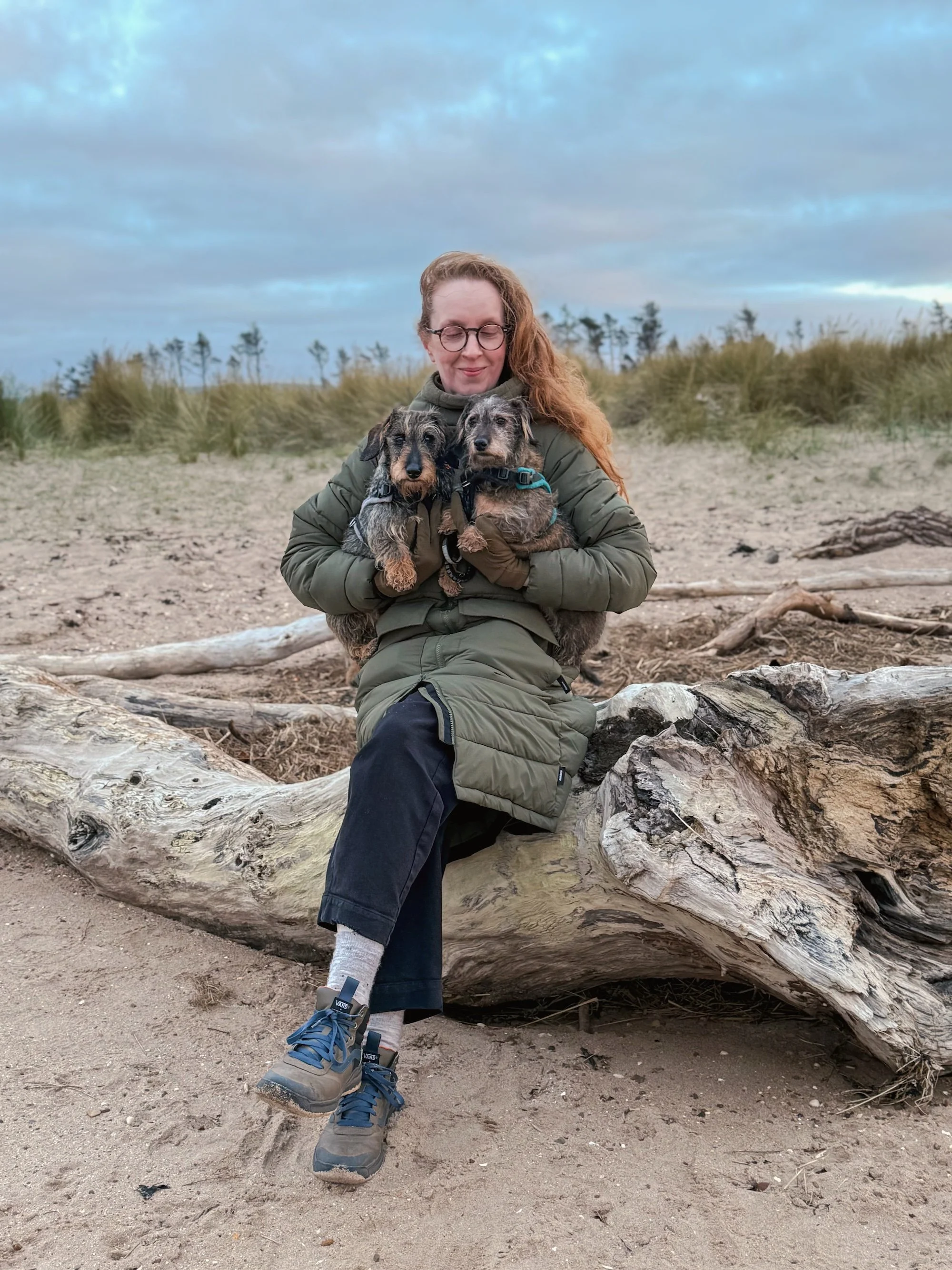
Photo taken on Hedderwick Sands, John Muir Country Park, East Lothian, 22 April 2026